An Operator's Dilemma
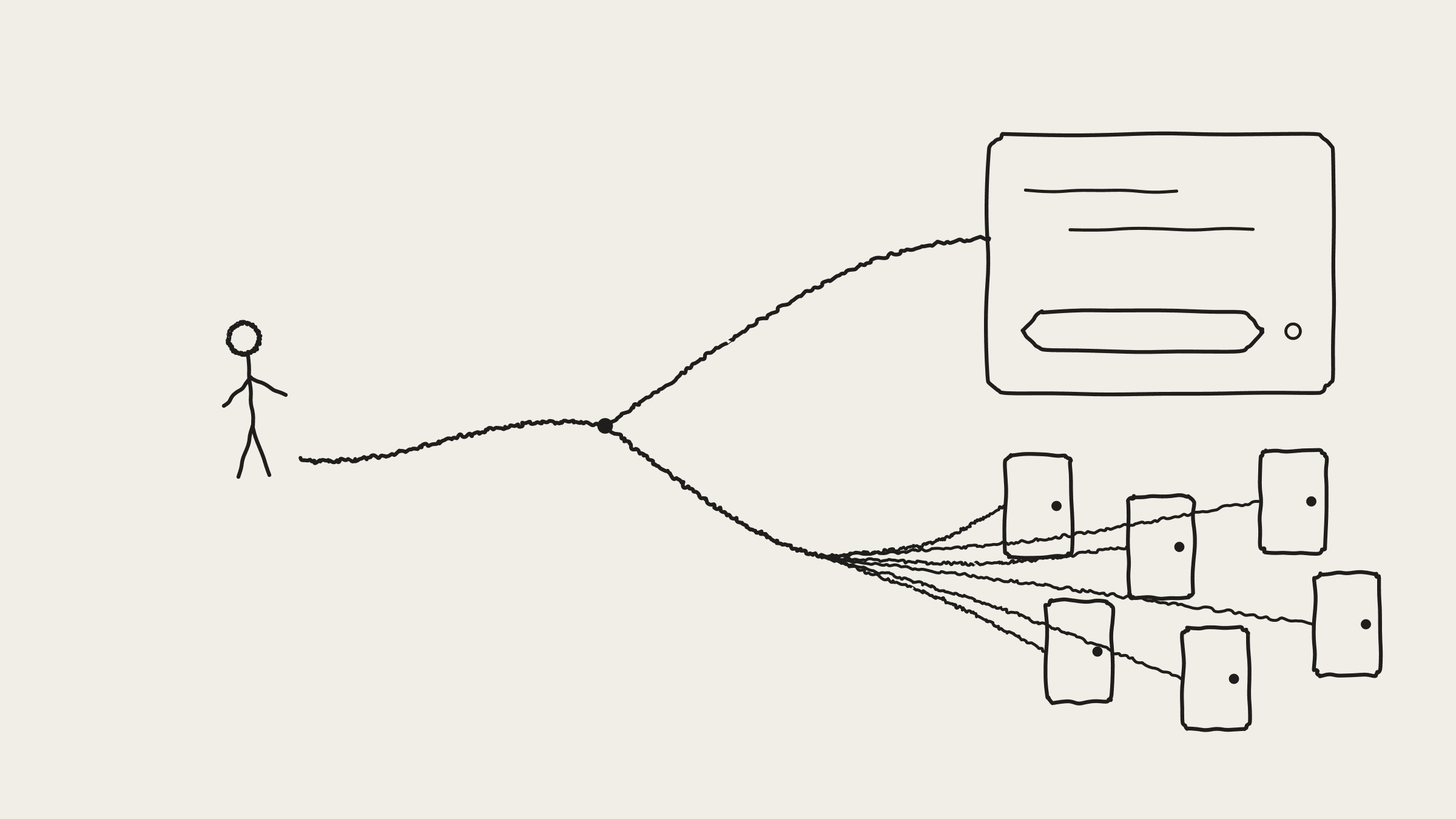
Think about the last time you had to pick something. A laptop, a course, a tool for some task at work. Did you search for it, or did you ask? Somewhere in the last two years, without ever deciding to, most of us moved from typing keywords into a search bar to asking a chat window in full sentences. It feels like a small change of habit. It is not. It is the front door of the internet quietly moving.
Now flip to the other side of the screen. If you build digital products for a living, no matter what your job title states, that small shift in your users' behaviour is a question aimed directly at you. If people stop opening things and start asking for them, what happens to the thing you build?
I got to this question the slow way. Over the last four years I have built products, used dozens more, and watched hundreds of trading tools get built up close. With AI the pace only went up, because the cost of building collapsed and everyone who ever wanted a tool could suddenly ship it over a weekend. After a point I was seeing five new products solving the same niche problem, all blurring into each other. But one startup stayed with me. They did not build an interface at all. They built their entire product as an MCP server, all the value they wanted to deliver packaged as capabilities that any chat assistant could plug into. And in one stroke, it made more sense to me than the other hundred. No change in my workflow, no app, no layers of options, no onboarding video. Just intelligence you could talk to.
This sent me down a rabbit hole about UI itself. UI adds a learning curve, something I have learnt after reading HCI and building products, and trading interfaces are among the worst offenders. Candles, market depth, option chains, a hundred settings, and every user wants theirs arranged slightly differently anyway. So one instinct says remove the UI entirely and let people just ask for what they want. The opposite instinct says make it completely customisable and let every user build their own. I do not think either works. Time and again, people have experimented with both and failed miserably with user stickiness. Remove the UI and you lose everyone who does not know what to ask. And let's be honest, asking what you need for every task can never be considered a good interface. On the other hand, make it fully customisable and you have handed users a job they never applied for. My bet is we settle somewhere in the middle, a UI that is generated and personalised for each user, assembled fresh depending on who is looking at it and what they are trying to do. But this also means a massive amount of data and context about each user, how they interact, what they need, and how a custom UI can be built around that hyper-personalisation.
And once you accept that the interface itself is up for grabs, you land on the real question. Does the world converge to chat as one universal interface, or to a thousand interfaces, each hyper-personalised and built by hundreds of builders? Whichever part of the trinity you place yourself in, design, product or tech, this is the dilemma sitting under every high-level discussion you have had this year. Most of us have not named it yet. This essay is an attempt to name it.
How we got here
Since November 2022, taking ChatGPT's launch as the reference because everything now gets measured against that moment, my own thinking has moved through three phases.
Amusement came first. A chat screen with the world's worst UI, no sassiness, no taste, but doing wonders with writing. You could throw anything at it and it would make your draft better than what you wrote. You could even code somewhat, if coding meant pasting your entire file into the window, crossing your fingers, and trying again when it broke.
Then came adoption, when people started talking about the application layer. If you cannot build your own model, you can always build a product on top of one. Cursor was that moment for me. Suddenly I did not have to copy-paste code into a chat window, it just worked right there, half the time, but still. Soon every product I was already using started adding AI features, and new products got built and destroyed between two OpenAI DevDays. In the AI world, more releases happen in a month than the SaaS era saw in a year. Adoption is still going on, and it moves in waves depending on the interface: the content creation wave, the media generation wave, the Claude Code wave, the cowork wave.
And now application, which is where the dilemma kicks in. OpenAI opened up its APIs for everyone to build on. So did Anthropic and every other model provider, and Meta gave its entire model away. Then Anthropic shipped MCP, ChatGPT built an app store, and marketplaces of connectors started showing up inside both. Anyone can now build on top of intelligence, which means the question is no longer whether you can build. The question is where.

Figure 1: The three phases, from ChatGPT to the fork.
The two futures
Every builder today is placing a bet on one of two futures, and most are doing it without admitting it.
One Window
The first future is what I call the One Window. Chat becomes the universal interface, and everything you do with the digital world happens through a single box. We are already watching this get assembled. MCPs and Skills pull proprietary data and specialised domains like finance into the same chat window. App stores and connector marketplaces are live inside ChatGPT and Claude. Generative UI renders whatever interface the moment needs, a table when you need a table, a chart when you need a chart, a form when something needs your confirmation. Push this to its logical end and you get models small enough to run on devices, with a home screen generated uniquely for each user. Think about how every phone already looks different, with different app layouts and groups. Now imagine every app itself being custom, every element on screen different for each person, with most intelligence running locally and specialised calls going out only when needed. The payment still runs on Stripe or Razorpay rails, the trade still executes on a broker's systems, the delivery still moves through a logistics network. Sometimes a human confirms the final call, and for low-value or routine decisions the agent transacts on its own. But nobody opens those apps anymore. In this future you become a supplier. Essential, invisible, like a payment gateway.
There is a question buried inside this future that deserves its own essay, so I will only plant it here. Chat might be the window, but is chat the interface for intelligence? I do not think so. Chat is the command line of this era. It was the cheapest possible way to expose a model in 2022, text in and text out, not a designed endpoint. And like the command line, it pushes the entire burden of specification onto the user. A blank box is maximum freedom, and maximum freedom is a power user feature. Language is also a poor way to receive many kinds of information. A paragraph describing an option chain is strictly worse than the option chain. So even if the One Window wins, the window will not look like a chat box for long. Intelligence will pick its own rendering for each task, and chat will become one affordance among many. The GUI moment of intelligence has not happened yet. None of this weakens the dilemma, because the dilemma was never about what the surface looks like. It is about who owns it.
Thousand Front Doors
The second future is a Thousand Front Doors. Every serious company builds its own intelligence layer, with context, memory and workflows tuned to its domain. This is where we are seeing a Cambrian explosion right now. Every incumbent and every challenger wants AI-powered search, AI context and AI features inside their product, because a product that holds the deep context of one vertical can know its user better than a general assistant that holds shallow context of everything. The bet these companies are making is that being AI native, hyper-personalised, and running close to autonomy at scale is a moat. For this future to fully arrive, though, intelligence cannot stay concentrated with a few model companies. Models will have to be hosted and built upon by each company in the way they want to serve, and in that world the product moat becomes the whole game. You defend your own front door. You stay a storefront.
Supplier or storefront. That is the dilemma.
There is an honest tension underneath the second future that deserves saying out loud. What AI consumer startups are banking on today is that they can deliver value on top of the model's intelligence through context and memory. But the model companies are getting into more of their users' lives every month, collecting context across every app and service they touch, and compounding in intelligence as they do. The startups' moat and the platforms' ambition are the same asset. Someone is wrong about who gets to keep it.
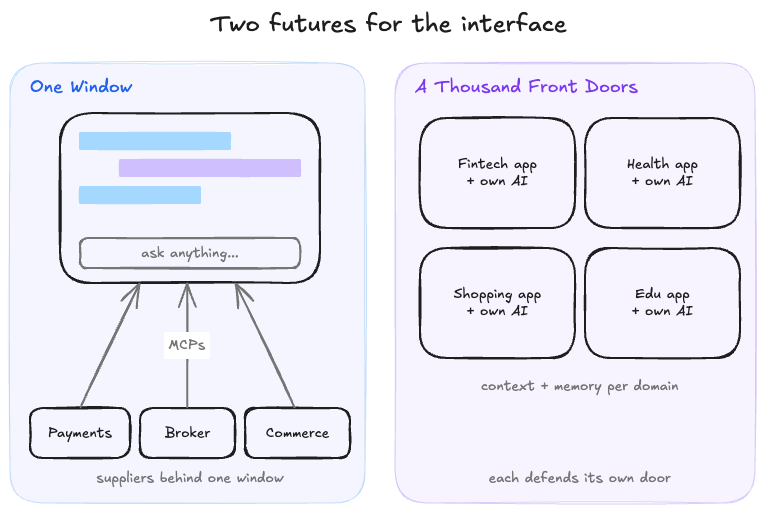
Figure 2: One Window vs a Thousand Front Doors.
Discovery moved, transactions didn't
Here is why the dilemma is genuinely hard right now, instead of obvious. If both discovery and transactions had already moved to AI platforms, the answer would be simple: become a supplier today, before the shelf space runs out. If neither had moved, also simple: ignore the noise and keep building your platform. We are in neither state. We are in the split state.
Discovery has moved. People who used to search now ask. The question of which screener to use, which laptop to buy, which course to take, increasingly gets answered inside a chat window instead of a results page, which is why GEO is quietly replacing SEO as the growth conversation. AI is replacing what search used to do for people, and the front door of the internet has shifted.
But the transactions have not followed. The order still gets placed on the commerce app, the trade still executes on the broker, the money still moves where trust and regulation live. Majority of the volumes are exactly where they were. The cash register has not moved an inch, even as the footfall now arrives through a different door.
And there is a second wrinkle here, one I only understood by actually trying to connect these things. MCP has no Googlebot. When the web was young, Google crawled you automatically. Build a site and you got discovered, because the discovery layer came with a distribution mechanism built in. Nothing like that exists for MCPs today. Claude, ChatGPT and Gemini do not suggest your server as a tool the way search surfaced your website, and connecting one is still unintuitive for anyone who is not already a power user. Which means the supplier path currently ships with a hidden bill. You give up your interface, and you still have to solve your own distribution.
That is the part most analyses miss. Becoming infrastructure was supposed to mean outsourcing distribution to the platform. Today it means neither owning the user nor inheriting the reach.
Retail already ran this experiment
Before concluding that the world must collapse into one of the two futures, it is worth remembering that retail already ran this experiment. Amazon aggregated demand, Shopify armed the rebels, and both built enormous businesses in parallel. They coexist because they serve different sellers and different buying modes. When you want the cheapest version of a known thing, you go to the aggregator. When you want a specific brand's thing, you walk into its store. And look closely at how a Shopify merchant actually operates. They own the transaction and the customer, and they rent discovery from Meta and Google ads. That is exactly the split state, running profitably for a decade. Which opens up a possibility this essay has so far treated as temporary. Maybe the split state is not a corridor the world passes through. Maybe it is the destination. Own the cash register, rent the front door. Most serious companies will end up doing both, an MCP into the window and a defended storefront, the way brands today sell on Amazon and still run their own store.
The dilemma survives this, because Amazon first sellers and brand first sellers are structurally different companies even when both do both. What you are choosing is your centre of gravity, not membership of an exclusive club. But there is one condition holding the coexistence together, and it should be said plainly. Amazon and Shopify could coexist because Amazon never owned the whole funnel. Neutral discovery rails stayed purchasable by anyone with a budget. If the window aggregates discovery, owns the intelligence, and completes the transaction through agentic checkout, that neutral rail disappears, and coexistence becomes much harder than it ever was in retail. Whether the rail stays open loops right back to the question of who crawls the MCPs.
We have watched this curve before
We have also lived through an interface shift like this once. Around 2010, every product meeting had the same question, do we need an app, and the answer felt optional right up until it did not. Then mobile crossed desktop in worldwide internet usage, and here is the part everyone forgets. The old surface did not die. A decade after the crossover, desktop still carries close to half of the world's page views. It got reassigned. Desktop kept the dense, creation shaped work, and mobile took the frequency and the consumption.
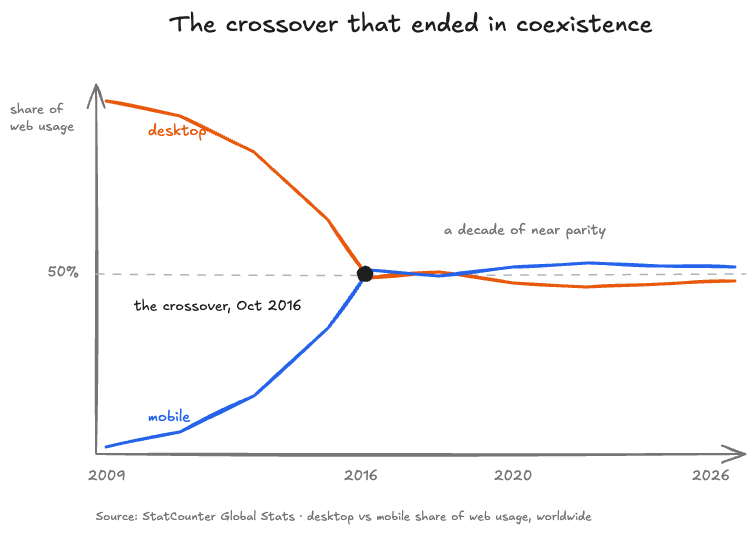
Figure 3: The crossover that ended in coexistence. Source: StatCounter Global Stats.
Which leaves the honest question hanging over the next curve. Mobile was supposed to eat everything, and it settled at roughly half. Does that mean AI agents will also coexist, taking their share of usage and settling in beside the rest? Or will they behave differently, eating into the desktop's share of work faster than anything before them? I do not know, and neither does anyone selling you certainty about it. What I do know is that the ritual is repeating. Today's version of that 2010 meeting question is, do we need an MCP. And the leading indicator will look familiar too. Companies once bragged about mobile's share of their traffic on earnings calls. In a few years they will report agent mediated sessions the same way.
The graveyard in the middle
Meanwhile, a third group refuses to choose, and they are the ones dying fastest.
As code becomes cheap, thousands of tools ship every day, built over a weekend, on rented infrastructure, priced like software and marketed like a startup. Almost all of them have neither distribution of their own, no brand, no users, no moat, nor distribution inherited from the AI platforms, because as we just saw, nobody is crawling MCPs. Something that took a couple of hours to build carries a couple of hours of defensibility. Of the hundreds of trading tools I mentioned at the start, this describes most of them. The product works, but there is no answer to the only two questions that matter: how does anyone find this, and why does anyone stay?
The middle path is not a hedge between the two futures. It is exposure to both downsides with neither upside. This messy middle existed even during the internet boom, when every tiny event invite or utility got its own domain and called itself a product.
The 80/20, and the proactive problem
So which future wins? The honest answer is that it depends on which market you are actually in, and most builders are wrong about which one that is.
Split the demand side in two. The number here is not from a survey and the real split will be some version of this shape.
The 80% uses the internet to consume content, scroll social media, and order things once in a while. Their work does not run on twenty apps. They will never connect an MCP, never set up a data pipeline, never build a workflow. For them the One Window is genuinely appealing, one place that answers everything, and this is where ChatGPT will expand and Gemini will fight to keep Google's share. Notice also that most writing about AI today is about enterprise, because that is where the money is, while the consumer side gets skipped. The consumer side is where the 80% lives.
But there is one thing I learnt watching AI features land inside mass-market products, and it changed how I think about this segment. The mass consumer is not prompt first. Reactive intelligence, the blank box waiting for a well-formed question, is a power-user product wearing a consumer costume. For the 80%, intelligence only works when it is proactive, when it surfaces the thing before it is asked for, embedded inside a flow the user was already in. Which means this segment gets won the way it has always been won, by distribution and by regulatory or operational moats, in banking, wealth, food delivery, with AI layers inside the product but the underlying service doing the actual winning. AI becomes a feature of the winner, not the reason they won.
The 20% is where the builders live. The power users running twenty apps a day, hopping platforms for a one percent better experience, connecting MCPs, structuring their work through agents, or at least having tried Claude Code once. Most people reading this are in this segment, some still awed, some building their own thing, some convinced human intelligence has been rendered moot, and that is exactly why we over-index on it when we predict the future. Here, context depth and workflow ownership decide everything, and both futures are live and fighting for the same user.
And the fight resolves at different speeds in different categories. In dev tools the window has arguably already won. Look at how fast Claude Code occupied the category Cursor created. In shopping, the volumes still run on the commerce apps but discovery has already left for chat. Where trust and regulation pin the transaction down, the platform holds, for now. The gradient is real, and it is moving.
What I'd bet
A long post should end with a formula, not a summary. This is what my agent suggested, and I think it was right. So here is mine.
Where you build = who owns discovery in your category × whether the transaction can move without breaking trust.
If discovery in your category has moved to chat and the transaction can follow without a trust or regulatory break, you will end up a supplier whether you like it or not. Build the best pipe early, and treat the distribution of that pipe as a product problem in itself, because nobody is going to crawl you.
If the transaction cannot move, the storefront survives, and your job is to make it proactive and AI native before a challenger does it to you.
And if you are building neither the pipe nor the storefront, just a tool on rented infrastructure with rented distribution, you are not choosing a future. You are waiting for one of them to delete you.
Which brings me back to the startup from the beginning, the one that built everything as an MCP. I still think about them, because they made the braver bet. They saw the One Window coming and moved early, and they also inherited the hidden bill that comes with it, a pipe that nobody crawls. Whether it was the right bet depends on which future arrives first, and I honestly do not know. I will keep score and report back.
And if you are living this dilemma inside your own product, or you think I have read one of these futures wrong, I would love to hear it. Write to me at hello@hardikmore.com.
Thanks to @rohatgi_akshat for helping me run this concept through him over multiple discussions, and for the pre-read.